Nerve Block Ultrasound: SonoHealth Point of Care Ultrasound for Regional Anaesthesia and Pain Medicine
See the anatomy. Guide the procedure. Bring ultrasound to the point of care.
Ultrasound guidance plays an important role in modern regional anaesthesia and pain medicine. By providing real-time images during a nerve block, it helps clinicians identify relevant anatomy and guide needle placement near the intended target.
SonoHealth handheld ultrasound brings portable imaging into this workflow, offering clinicians a compact option for assessment and procedural guidance in appropriately equipped clinical settings.
What Is Nerve Block Ultrasound?
A nerve block involves administering medication near a nerve or group of nerves to temporarily interrupt pain signals. Depending on the clinical indication, nerve blocks may support surgical anaesthesia, postoperative pain relief or selected pain-management interventions.
Ultrasound provides visual guidance during the procedure. Clinicians can assess the target region, observe nearby structures and monitor needle movement and local anaesthetic spread when these are adequately visible.
Why Ultrasound Guidance Matters
Every patient’s anatomy is different. Ultrasound helps clinicians assess the anatomy in front of them and adapt their approach accordingly.
Its practical value includes:
- Anatomical assessment: Identifying nerves and surrounding muscles, fascia and blood vessels.
- Needle guidance: Following the needle and locating its tip when image quality and technique allow.
- Observation of medication spread: Assessing how local anaesthetic distributes around the intended target.
- Procedural planning: Evaluating target depth and nearby structures before needle insertion.
These capabilities depend on the clinician’s scanning and needle-guidance skills, as well as the equipment and clinical circumstances.
Evidence supports ultrasound guidance for many peripheral nerve blocks. A Cochrane review found improved block success and fewer blocks requiring supplementation or conversion to general anaesthesia compared with alternative localisation techniques. These findings relate to ultrasound guidance generally and are not evidence of SonoHealth-specific clinical outcomes.
SonoHealth Point of Care Ultrasound
Point of Care Ultrasound, or POCUS, brings imaging to the location where the patient is being assessed or treated. For clinicians performing nerve blocks, portability can help make ultrasound more accessible across clinical work areas.
SonoHealth’s handheld design displays ultrasound images on a compatible device, allowing a compact imaging setup without a conventional ultrasound console. The manufacturer describes wireless image transmission through the probe’s own Wi-Fi connection.
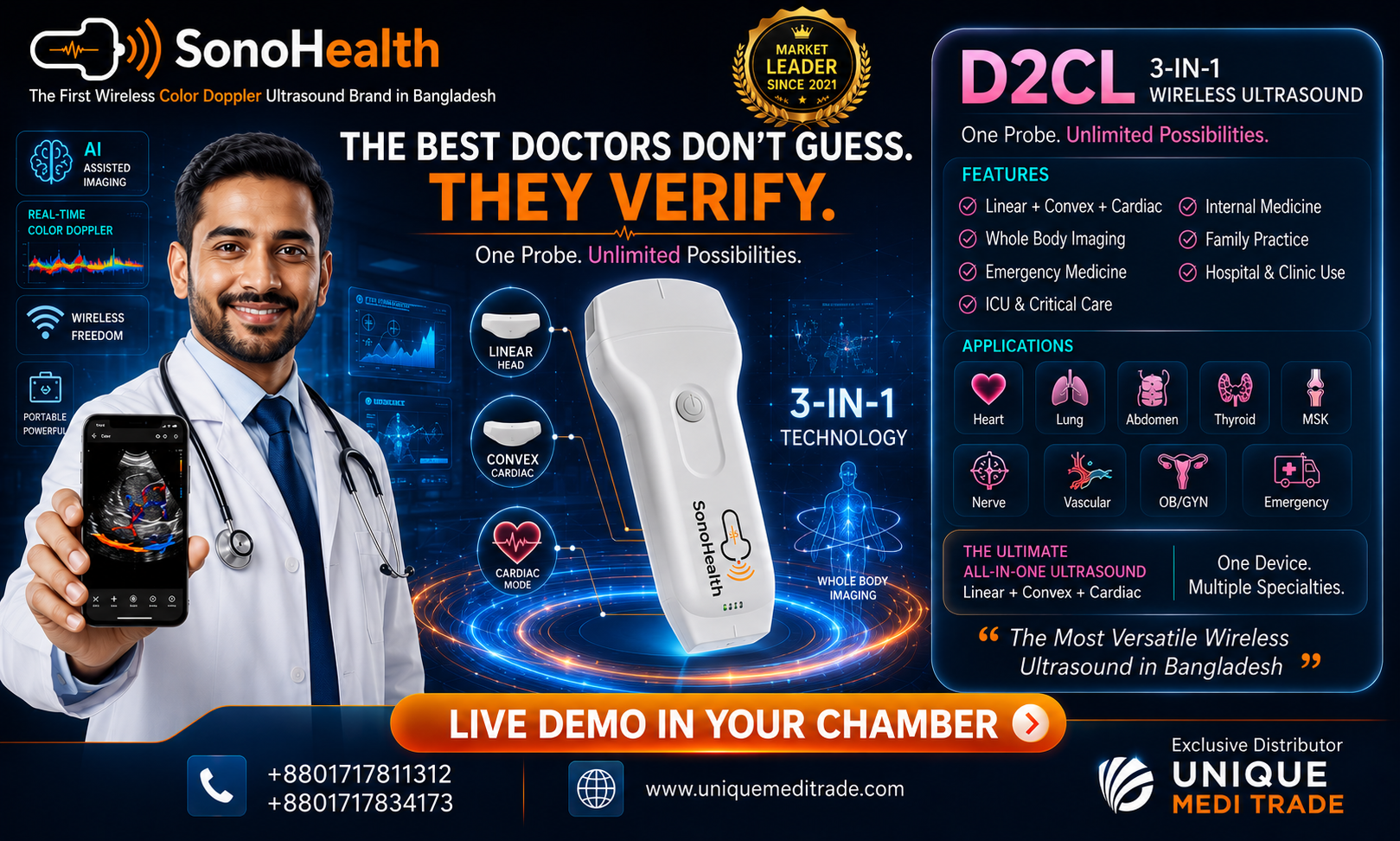
SonoHealth D2CL: Linear and Convex Imaging in One Device
The SonoHealth D2CL combines linear and convex arrays. Its published specifications include:
- Linear frequency: 7.5/10 MHz.
- Convex frequency: 3.2/5.0 MHz.
- Imaging modes: B-mode, B/M, Colour Doppler and PW Doppler.
- Puncture assistance: In-plane and out-of-plane guide lines, with needle enhancement.
- Compatible operating systems: iOS, Android and Windows.
These features provide options for superficial imaging and broader POCUS assessment. Clinicians should confirm the supplied configuration and evaluate image quality for their intended procedures.
SonoHealth P5L: A Compact Linear Probe Option
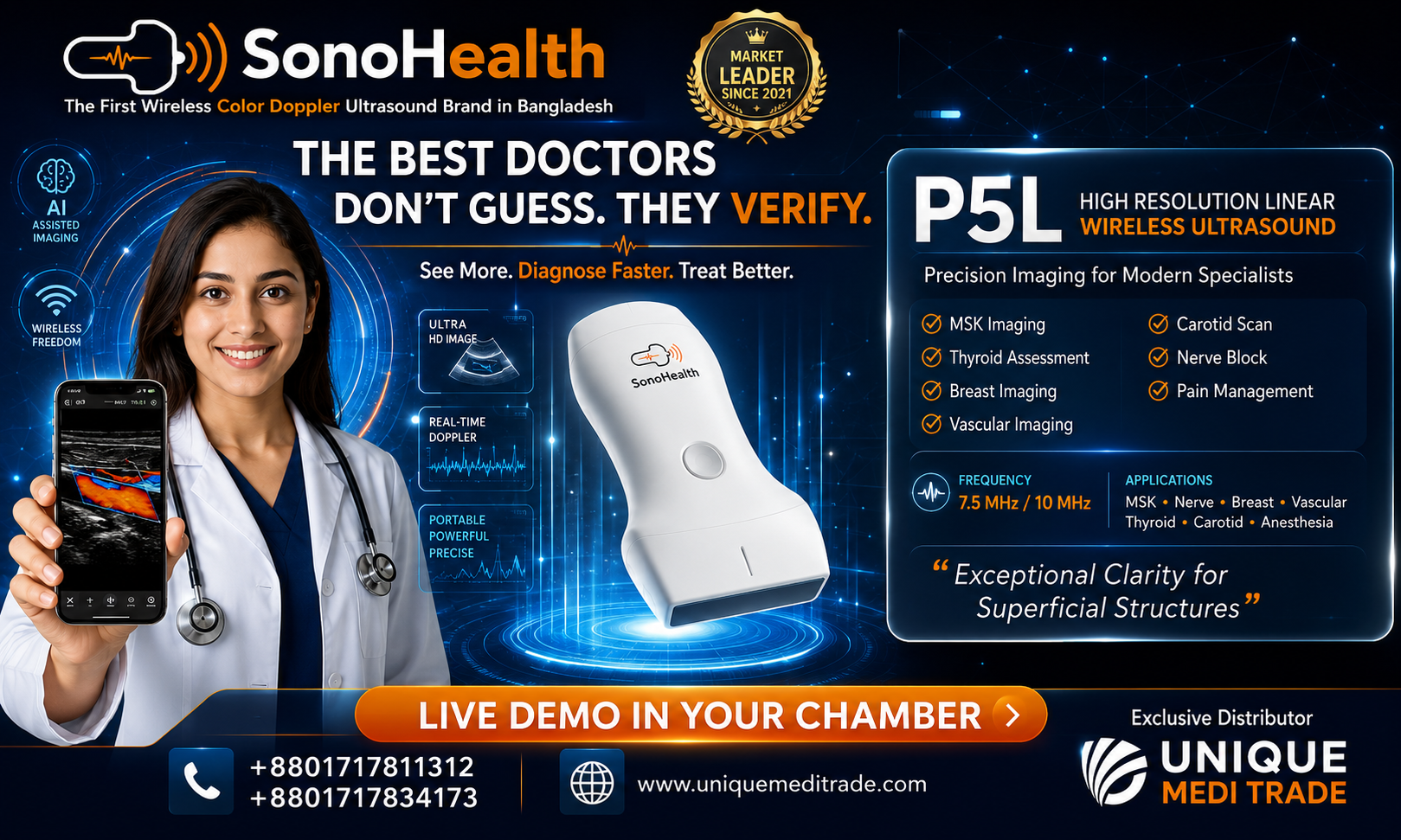
SonoHealth also offers the P5L linear probe within its handheld ultrasound range. Its compact format provides another option for clinicians considering portable superficial imaging. Selection should be based on the required imaging depth, needle visibility, clinical application and hands-on evaluation.
Clinical Skills Remain Essential
Effective ultrasound-guided nerve blocks require knowledge of anatomy, image interpretation and needle-tip tracking. Training should also address patient selection, aseptic practice, monitoring and the recognition and management of complications.
Ultrasound does not eliminate procedural risks. ASRA’s evidence assessment found benefits for selected block outcomes, while finding no significant effect on the incidence of postoperative neurological symptoms. Equipment features therefore need to be paired with competent clinical practice.
Explore SonoHealth for Your Clinical Practice
Choosing a nerve block ultrasound system starts with a practical question: Can it provide the anatomical detail and needle visibility required for your intended procedure?
A clinical demonstration offers an opportunity to assess image quality, handling, display compatibility and workflow before selecting a device.
For SonoHealth product information and demonstration enquiries in Bangladesh, contact Unique Medi Trade.
SonoHealth Point of Care Ultrasound — portable imaging to support informed clinical practice.